

Preparation & Architecture Matter More Than Ever
Last week MGI published its 2026 CPQ Buyer’s Guide. The takeaway is clear: the CPQ market is active, innovative, and crowded. It is also fragmented, not because it is immature, but because monetization models are fundamentally different. Vendors like Nue, for example, are gaining visibility by focusing specifically on subscription and usage-based complexity, while others remain optimized for configuration-intensive environments. Like Nue, most CPQ platforms are built around specific dominant models and that specialization naturally drives fragmentation.
That same fragmentation that defines the market also shows up in implementation risk, and it raises a question most buyers don’t ask early enough: Are we prepared to implement, or are we just prepared to select.
Why Most CPQ Implementations Fail Before Configuration Begins
Vendor overpromising is rarely the root cause of CPQ failure. Most CPQ implementation breakdowns are preparation failures, not software failures. For CPQ to succeed, institutional knowledge around manual exceptions, legacy selling models, override rules, and account-specific process variations must be translated into structured, maintainable logic.
CPQ does not create complexity. It exposes the workarounds and inconsistencies that have accumulated over time.
Implementing CPQ requires organizations to clearly define:
- How products are structured
- How pricing is determined
- How discounts are governed
- How deals transition into contracts and billing
When those answers are inconsistent or undocumented, CPQ makes the gaps visible immediately and painfully.
The Upfront Work That Pays Off Throughout the Entire Implementation
At Ravus, we consistently see that time invested upfront in clarifying products, bundles, pricing structures, and discount authority pays dividends throughout implementation and beyond. The more clarity established early, the fewer disruptions downstream.
Teams run into trouble when they treat data cleanup as a short parallel project activity or design the system solely around how they sell today. Pricing models evolve, usage-based billing expands, new channels are introduced, and acquisitions reshape catalogs. Without a forward-looking design, major architectural decisions often need to be revisited within months of go-live.
CPQ Architecture: Why the System Design Decision is a Revenue Decision
Architectural clarity becomes critical as CPQ becomes more tightly embedded within CRM, Billing, and ERP. The downstream dependencies are unforgiving:
- Quote structure must map cleanly to contracts
- Contracts must translate cleanly into billing
- Billing must support accurate revenue reporting
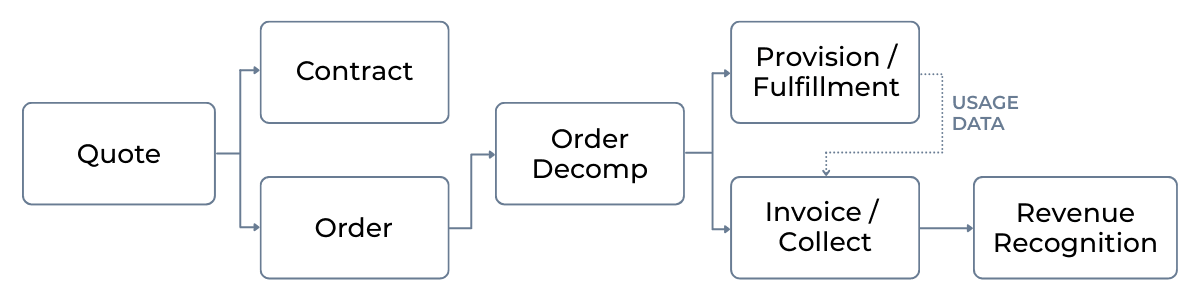
Misalignment across these systems introduces operational risk and revenue leakage that no user interface improvement can solve. This is why integrated CPQ and billing architectures are drawing attention. Platforms that unify configuration, pricing, contract management, and billing logic within a shared data model can reduce handoff friction and improve revenue integrity.
However, integration does not replace the need for rationalized data and disciplined governance. A well-integrated platform built on messy commercial logic is still a messy system, just a faster one.
The CPQ Vendor Landscape: Specialized, Fragmented & Actively Evolving
The MGI 2026 Buyer's Guide reflects a market shaped by specialization. Vendors like Nue have carved out visibility by focusing specifically on subscription and usage-based billing complexity — a fast-growing segment as SaaS, consumption, and hybrid monetization models become the norm. Others have remained optimized for high-SKU, configuration-intensive manufacturing and technology environments.
This isn't a market where one platform fits all. The right CPQ vendor selection decision starts with honest clarity about your dominant monetization model, not with a feature comparison matrix.
Key Questions to Ask Before CPQ Vendor Evaluation
- What is your primary monetization model: configuration-intensive, subscription, usage-based, or hybrid?
- How will your pricing model likely evolve over the next three to five years?
- What are your most complex pricing exceptions, and are they documented?
- How tightly must CPQ integrate with your existing CRM and billing systems?
AI in CPQ: Table Stakes or Transformational?
Another important theme in MGI’s report, and one shaping buyer evaluations, is AI. Most CPQ vendors now position their platforms as AI enabled. Natural language assistants, guided selling prompts, and automated proposal generation are increasingly standard. In many ways, AI is now table stakes, expected rather than differentiating. The real question is whether it produces measurable business value.
From our experience, AI can meaningfully accelerate CPQ initiatives when applied with discipline.
Where AI Delivers Real Value During CPQ Implementation
During implementation, AI tools can:
- Analyze product catalogs and identify redundant or conflicting SKUs
- Surface inconsistencies in pricing logic before they are codified
- Assist in documenting configuration rules and approval workflows
- Streamline requirements gathering and improve traceability across design decisions
At Ravus, we use AI-assisted analysis to shorten discovery cycles, improve documentation accuracy, and make commercial logic more transparent and easier to maintain long-term. This doesn't just increase implementation efficiency — it strengthens governance, which compounds in value as the business scales.
CPQ is Commercial Infrastructure - Not a Quoting Upgrade
Fundamentally, a CPQ implementation is about translating business logic into governed, scalable rules. A partner that simply builds what exists today may codify inefficiencies into a new platform. The right approach challenges SKU sprawl, approval design, pricing governance, and downstream billing implications before configuration begins.
CPQ is powerful when treated as commercial infrastructure rather than a quoting upgrade and the implementation of CPQ forces clarity, demands rationalized data, disciplined governance, organizational alignment, and a forward-looking view of how the business plans to monetize in the years ahead.
Organizations that approach it with that mindset consistently turn CPQ into an enabler of scale instead of a source of friction.
How Ravus Approaches CPQ Implementation Differently
Ravus brings a preparation-first, architecture-forward approach to every CPQ engagement. Before configuration begins, we work with your team to:
Rationalize product catalog and pricing structures
Document and govern exception logic and approval workflows
Map quote-to-cash dependencies across CRM, billing, and ERP
Apply AI-assisted analysis to accelerate discovery and improve rule documentation
Design for the business you're becoming, not just the one you are today
Ready to Build CPQ the Right Way?
Chelsea Fickbohm