How to Fix Account Hierarchy Without Breaking Consolidated Billing
In short
Account hierarchy fragmentation is not a CRM data-cleanup task. It's an architecture question about which system owns the org structure, how billing entities map to it, and how mergers, acquisitions, and reorganizations get reflected everywhere at once. The companies that handle multi-entity customers cleanly are the ones that treat hierarchy as structured data with one owner, not the ones with the most careful manual account merges.Why Account Hierarchy Fragmentation Keeps Getting Worse
Every acquisition, subsidiary, regional entity, and internal reorg adds another layer to the account structure and another opportunity for CRM, CPQ, and billing to disagree about who actually owns whom. A subsidiary added in CRM after an acquisition doesn't always get linked to the right parent in CPQ. A billing entity split during a reorg doesn't always get reflected in how invoices consolidate. An account merged in one system quietly stays duplicated in another.
When hierarchy isn't governed as a single structure, organizations see quotes issued at the wrong entity level, invoices that consolidate accounts that should be billed separately, or split ones that shouldn't be, and revenue reporting that doesn't roll up the way leadership expects. What looks like a billing error or a reporting discrepancy is often neither. It's hierarchy drift surfacing downstream, in a system that had no way to catch it.
Nobody owns the hierarchy end to end
M&A and reorgs outpace the systems
Hierarchy drift hides until it hits an invoice
Where Account Hierarchy Breaks Across Systems
Four-system hierarchy flow · flagged boxes are where account structure typically divergesCRM
Account & Org StructureCPQ
Billing Entity SelectionBilling
Consolidated Invoice GroupingERP / Reporting
Entity-Level Revenue RollupWhat Account Hierarchy Fragmentation Looks Like in the Real World
Invoices consolidate accounts that should be billed separately
Two subsidiaries that operate independently get merged onto one invoice because billing never reflected the split defined in CRM.Quotes skip the approval level tied to the parent account
A deal gets quoted at the subsidiary level, missing pricing or discount governance that should have applied at the parent.The same customer shows up as two different accounts
A subsidiary added after an acquisition never gets linked to its parent, so it's tracked, quoted, and billed as if it were a brand-new customer.Revenue doesn't roll up the way leadership expects
Reporting reflects whatever hierarchy each system happens to have, so entity-level and consolidated revenue views disagree with each other.Reorgs create a backlog of hierarchy fixes
Every internal restructuring adds a queue of accounts that need to be re-parented, re-linked, or re-billed — and the backlog rarely gets fully cleared before the next reorg.M&A integration stalls on account cleanup
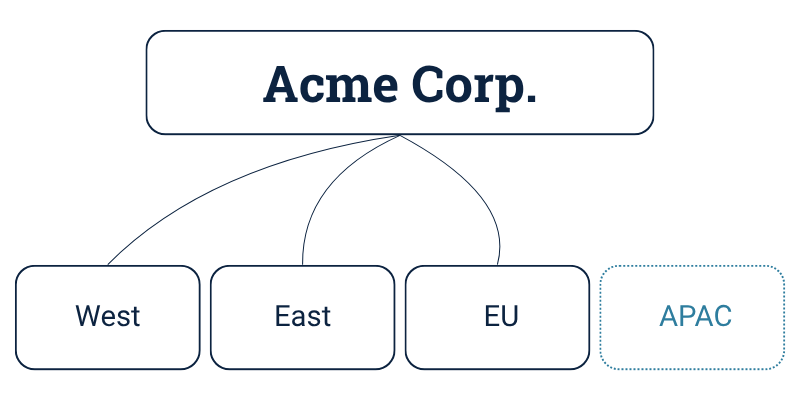
Newly acquired entities can't be quoted or billed correctly until their place in the hierarchy is resolved, and that resolution competes with everything else the integration needs to get done.One Customer, Three Hierarchies
How Acme Corp's org structure looks different in every system, right now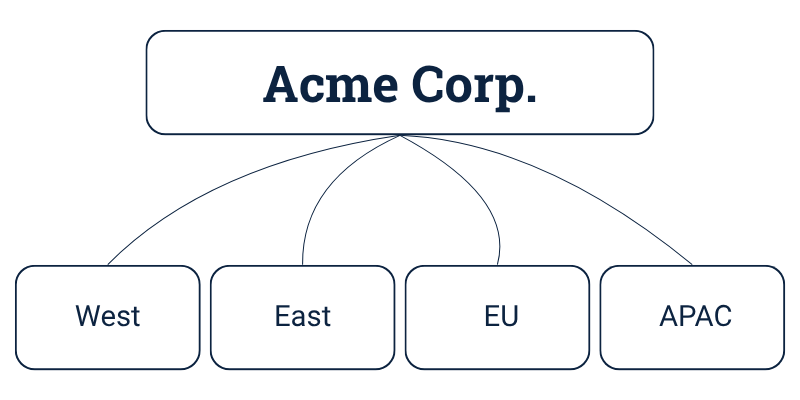
What Ravus Helps You Build or Fix in the Account Hierarchy
A single system of record for account structure
Ravus helps teams decide where the org hierarchy actually lives and design how CPQ, billing, and reporting inherit from it.Consolidated billing that matches how the business is actually structured
Ravus helps teams rebuild billing entity mapping so invoices consolidate or split exactly the way finance and the customer expect.A hierarchy that survives the next acquisition
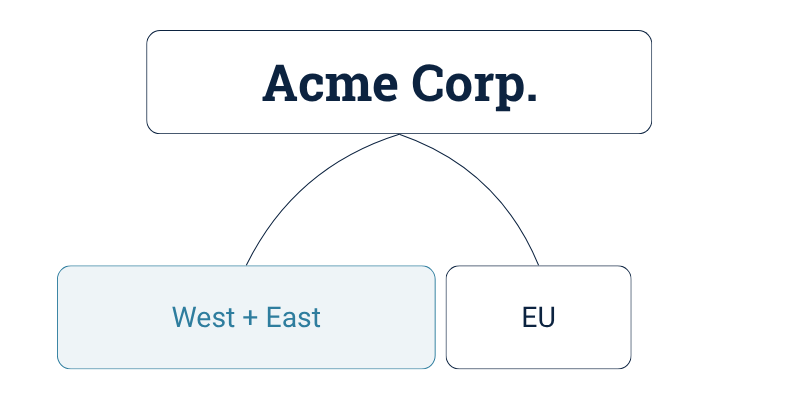
The goal isn't a one-time cleanup. It's a governed process for propagating M&A and reorg changes across every system that depends on the structure.From Scattered Entities to One Governed Hierarchy
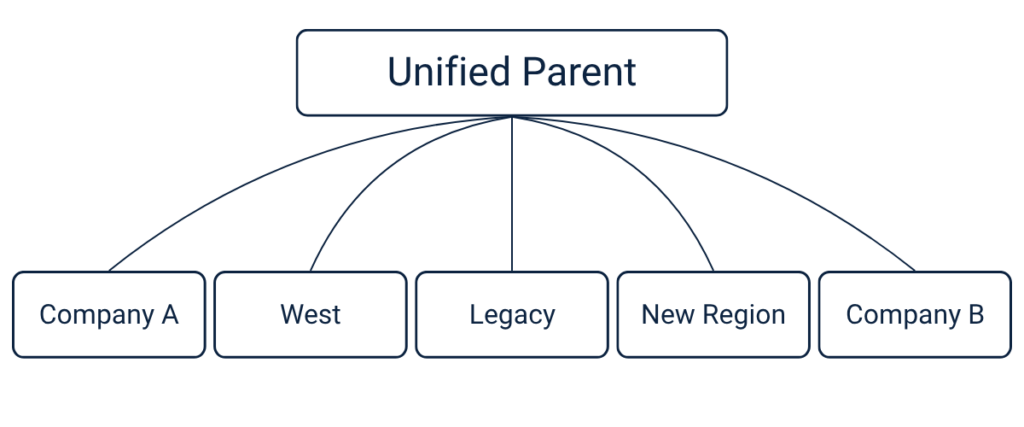
Before / after account consolidation, modeled on the Ravus healthcare M&A engagement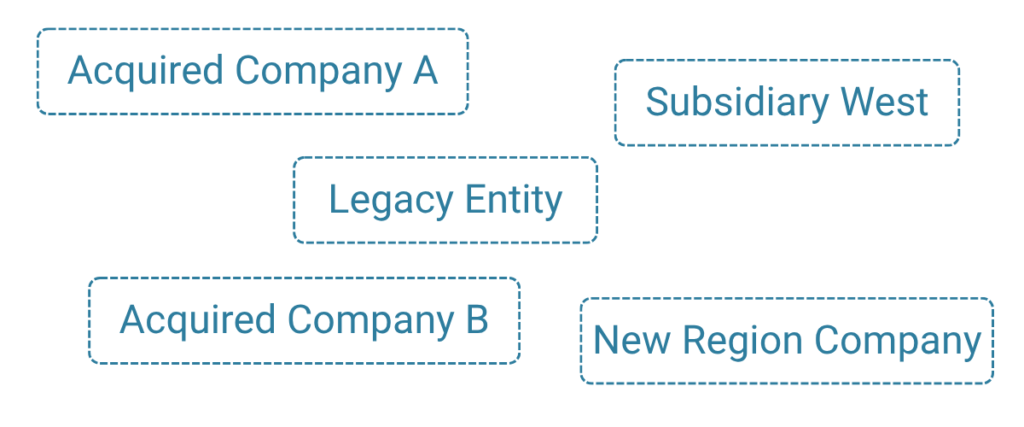
How to Fix Product Catalog Fragmentation Without Disrupting Billing
Profile parent-child relationships and billing entity assignments across CRM, CPQ, and billing to find mismatches, duplicates, and orphaned accounts.
Pick one system to be the source of truth for account hierarchy and design every other system to inherit from it.
Re-parent, merge, and split accounts in an order that protects invoices and consolidated billing already in progress.
Define how new entities, acquisitions, and internal restructures get reflected across every system — before the next change happens, not after.
FAQs About Account Hierarchy and Consolidated Billing
These are the questions Finance, RevOps, and IT leaders ask when account structure stops matching how the business is actually organized.How Ravus Helps You Fix Account Hierarchy
The right path depends on whether the priority is assessment, hierarchy architecture, migrating entity data, or keeping CRM and billing in sync going forward.





Explore Related Billing and Quote-to-Cash Problems
Teams working to fix catalog fragmentation often also need to reduce quote cycle time, launch new pricing safely, or untangle account hierarchy and contract structures feeding off the same catalog.Proof from Complex Revenue Operations Environments
Modernizing Billing and Revenue Operations for a Global Healthcare Organization
A global leader in digital health and medical devices engaged Ravus in a multi-year initiative to unify billing, CPQ, and revenue operations across four legal entities — replacing fragmented, spreadsheet-driven processes inherited from multiple acquisitions. Ravus led the full technical transformation: BillingPlatform as the billing and revenue system of record, Salesforce CPQ configuration, bi-directional integrations to BillingPlatform, and a NetSuite connector for invoice delivery and financial close.
KEY OUTCOMES: Improved close timelines → Material revenue leakage recovered → Manual invoicing significantly reduced across four legal entities
BillingPlatform Managed Services: Stabilizing Complex Billing for a DTC Logistics Provider
A leading 3PL came to Ravus after inheriting an incomplete BillingPlatform implementation from a prior vendor — 150+ products in the catalog, most unused, and finance still handling complex invoices manually through a legacy system. Ravus delivered a focused managed-services engagement that automated Free Text Invoice billing, cleaned up the catalog, and moved the operation into a single, working system without disrupting a single active billing flow.
KEY OUTCOMES: Dozens of invoices automated monthly → ~60 catalog cleanup items packaged → Zero disruption to live billing